
What is Magnesium?
Magnesium is a mineral your body uses every day — quietly working in the background.
Think of it like a helper behind the scenes.
It supports many normal processes that help keep everything running smoothly.
You’ll find magnesium naturally in a wide range of foods, and it’s also available as a supplement.
Why is Magnesium Sometimes Called “The Spark of Life”
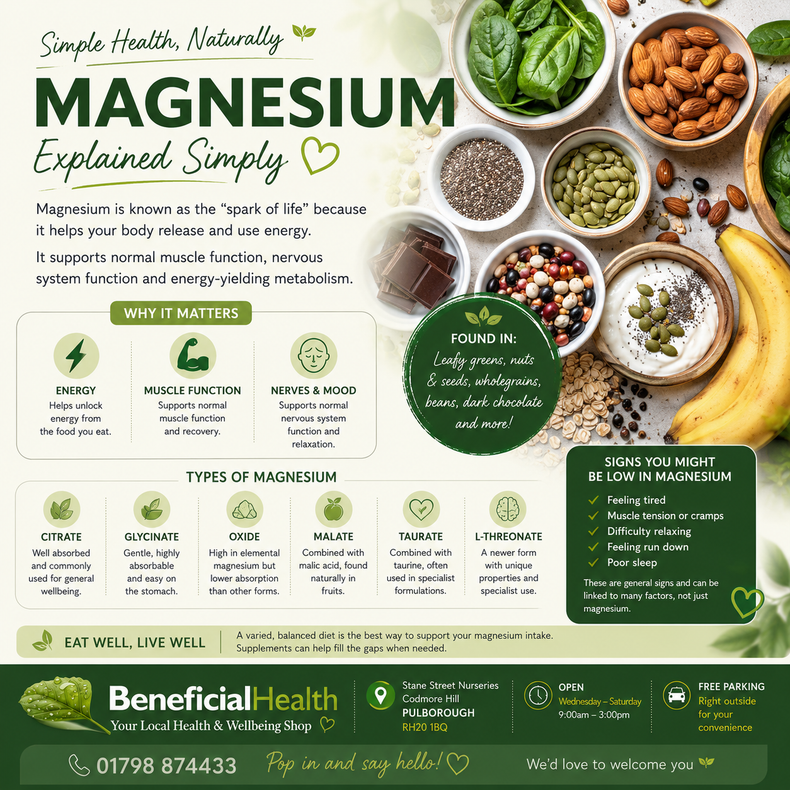
Magnesium is sometimes referred to as the “spark of life”
Not because it gives energy directly —
but because it helps your body release and use energy.
A Simple Way to Think About It
Think of your body like a battery
Food provides the energy…
but magnesium helps unlock and activate that energy so your body can use it.
The Techy Bit (If You’re Curious!)
Magnesium plays a key role in processes involving ATP (adenosine triphosphate) — often described as the body’s “energy currency”.
ATP needs magnesium to become biologically active (often referred to as Mg-ATP).
Magnesium is also involved in:
- Enzyme activity (hundreds of biochemical reactions)
- Normal muscle function
- Normal nervous system function
What Are the Different Types of Magnesium.
Magnesium supplements come in different forms — and this can feel confusing at first.
Think of it like different vehicles carrying magnesium
Each type combines magnesium with another compound, which affects how it behaves in the body.
Magnesium Citrate
- A commonly used form
- Water-soluble
- Generally well absorbed
Often chosen as a general, everyday option
Magnesium Glycinate (Bisglycinate)
- Bound to an amino acid (glycine)
- Designed to be stable and well absorbed
- Typically gentle
Often chosen for ease of use in daily routines
Magnesium Oxide
- High in elemental magnesium
- Less soluble
- Lower bioavailability
Often used where higher magnesium content per dose is needed
Magnesium Malate
- Combined with malic acid (found in fruits)
- Included in many formulations
Magnesium Taurate
- Bound with taurine
- Less commonly used
- Found in more specialised products
Magnesium L-Threonate
- A newer form
- Structurally different
- Often found in specialist supplements
What Does “Elemental Magnesium” Mean
Not all of a supplement is magnesium itself.
Elemental magnesium refers to the actual magnesium content available.
Different forms contain different amounts — which is why labels can vary.
What Does “Bioavailability” Mean
Bioavailability is simply:
How much magnesium your body can absorb and use
This can vary depending on:
- The form of magnesium
- The individual
- Diet and lifestyle
What Foods Are High in Magnesium.
Magnesium is widely available in everyday foods:
Leafy greens
Spinach, kale
Nuts & seeds
Almonds, pumpkin seeds, cashews
Whole grains
Brown rice, oats
Beans & legumes
Lentils, chickpeas
Dark chocolate
(A popular favourite!)
A varied, balanced diet is a simple way to include magnesium naturally.
What Are Some Signs Your Diet Might Be Low in Magnesium
Magnesium intake can vary depending on diet and lifestyle.
Some people may notice:
- Feeling more tired than usual
- Occasional muscle tension
- Difficulty relaxing
- Feeling generally run down
- Changes in sleep patterns
Important:
These are general signs and can be linked to many factors — not just magnesium.
They are not a diagnosis, just something to be aware of when looking at overall diet and wellbeing.
Should You Take a Magnesium Supplement
Some people choose supplements as part of their routine, while others focus on food sources.
It depends on:
- Diet
- Lifestyle
- Personal preference
There’s no “one-size-fits-all” — it’s about what works for you.
Our Approach at Beneficial Health
At Beneficial Health, we keep things simple:
Friendly, down-to-earth advice
No pressure — just guidance
Helping you understand your options
If you’re unsure which magnesium might suit you, pop in for a chat — we’re always happy to help.
Visit Us
Beneficial Health
Stane Street Nurseries
Codmore Hill, Pulborough
Open Wednesday to Saturday 9:00am – 3:00pm
Free parking
Telephone 01798 874433
Prefer to Ask in Person
Sometimes it’s easier to talk things through.
Pop in and see us — we’d love to help